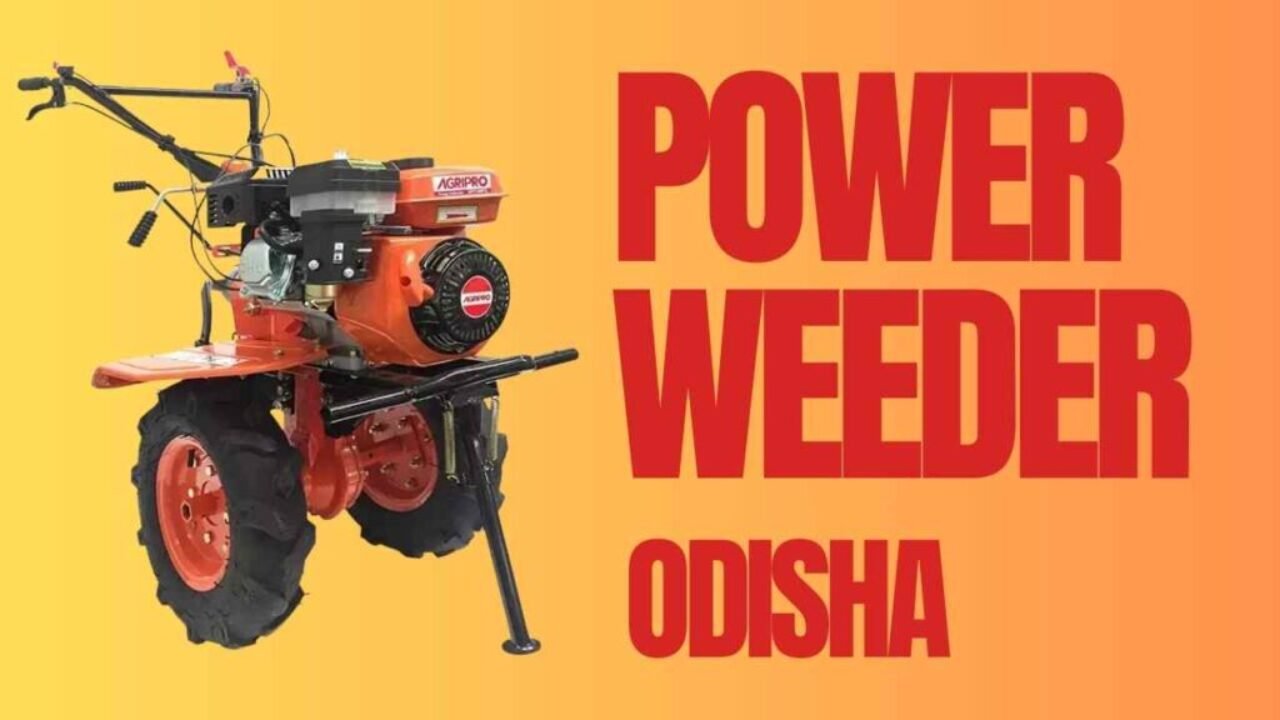
Odisha’s current cropping pattern and vegetable acreage support a strong, long-term power weeder opportunity, and your rough estimate of 1 lakh+ potential units over the next decade looks directionally realistic if small-farm mechanization continues to rise.
Dealers and online listings show an active market for 5–9 HP petrol and diesel power weeders, baby weeders and mini inter-cultivators across districts like Sambalpur, Cuttack, Bhubaneswar and Berhampur, with prices typically in the ₹25,000–₹80,000 range depending on HP and configuration. In parallel, the power tiller segment in Odisha has grown strongly, registering more than 11,000 units sold in 2022 at a CAGR of about 8.6%, which demonstrates the overall appetite for small and medium mechanisation in the state.
Odisha crops and mechanization base:
Rice, pulses (black gram, green gram), mustard, groundnut and vegetables remain the dominant crops, with millets and oilseeds gaining attention under newer state programs.Odisha has a high share of small and marginal farmers, and agriculture still employs nearly half of the workforce, which naturally pushes demand toward low-HP, compact machinery like power weeders rather than tractors.
If the average marginal farmer operates ~5 acres, that vegetable area corresponds to roughly 3.5–3.8 lakh potential “vegetable farmers”; even if only 30–35% adopt power weeders over time, the addressable market easily crosses 1 lakh units, especially with replacement demand next 10 years.
Current Odisha power weeder market snapshot
A sales volume of 20,000+ units to date with a 550+ dealer–distributor network is consistent with the state’s high rural share and diversified crops, especially in vegetable and rice belts.
Multi-brand outlets in Bhubaneswar, Cuttack, Berhampur and district towns typically handle a mix of imported weeders and Indian brands, indicating that the market is already in a “growth” rather than “nascent” stage.Scope in small agri mechanization (next 10 years)Rising labour cost, push for farm mechanization (SMAM and state schemes) and emphasis on vegetable, millet and horticulture clusters suggest sustained growth for small implements like power weeders, mini tillers, reapers and sprayers -With 7–8 lakh ha under vegetables and expanding millets, a realistic scenario.
New adoption plus replacement could support cumulative demand of 1lakh power weeders over 8–10 years, assuming steady subsidy support, dealer financing and active demo programs.Using your numbers in a narrativeYou can confidently present Odisha as:
A vegetable-dominant opportunity (1.7–1.9 million acres), plus cash crops like coconut, turmeric, jute and millets that all benefit from inter-row mechanization.A state where the installed base is 20K weeders today, but the structural potential is 1 lakh+ units, driven by marginal farmers with 3–5 acre holdings and 550+ dealers already created as the backbone of distribution.
In this context, positioning Odisha as a 7,000+ “already sold” power weeder in FY24-25 market with more than 550 dealers, but a structural demand potential of 1 lakh+ units over the coming 10 years, is both realistic and compelling.
The presence of strong local dealers—such as Om Sai Agro National, Rashmi Agro, Maa Mangla Traders, Threezee Agro, Maa Samleshwari, Bhoomi Laxmi Agro and Stego Tools—shows that the distribution backbone is already in place to support higher volumes and better after-sales service. Coupled with the state’s expanding vegetable and cash crop area and the proven growth of power tillers, Odisha can be projected as a strategic high-potential state for power weeders and other small farm machinery in the eastern region.